More homeowners in 2025 are choosing cool roofs to cut energy bills, stay comfortable indoors, and reduce their environmental footprint. With rising temperatures and an increased focus on sustainable housing, cool roofing systems have moved from niche to mainstream. But what exactly is a cool roof, and why is it such a popular choice today?
Table Of Contents
What Is a Cool Roof?
A cool roof is designed to reflect more sunlight and absorb less heat compared to a standard roof. Instead of letting your home bake under the sun, it keeps the building cooler by using special reflective materials, coatings, or lighter colors.
Cool roofs can be made from shingles, tiles, metal panels, or membranes. The main feature is their ability to reflect solar radiation, measured by the solar reflectance index (SRI). The higher the SRI, the cooler the roof stays.
Also Read: 10 Warning Signs You Need a Roof Repair or Replacement – Expert Guide for Homeowners
How Cool Roofs Work
Unlike traditional dark roofing materials that absorb heat, cool roofs use reflective surfaces to bounce sunlight away. Many also have high thermal emittance, which allows them to release absorbed heat more quickly.
The result is a roof surface that can be 50–60°F cooler on hot days compared to a conventional roof. This directly lowers indoor temperatures and reduces the need for air conditioning.
Benefits of Cool Roofs
1. Lower Energy Bills
By reducing the amount of heat entering your home, your cooling system doesn’t need to work as hard. This leads to noticeable savings on electricity costs, especially during peak summer months.
2. Extended Roof Lifespan
High heat accelerates wear and tear on roofing materials. Since cool roofs stay cooler, they experience less thermal stress, which can extend their service life.
3. Improved Indoor Comfort
Even homes without air conditioning benefit from a cool roof. Rooms stay more comfortable, especially in attics and upper floors.
4. Environmental Impact
Cool roofs help fight the urban heat island effect, where cities trap excess heat. By reflecting sunlight, they keep communities cooler and reduce greenhouse gas emissions. According to the U.S. Department of Energy, widespread adoption of cool roofs could make entire cities more livable .
5. Incentives and Rebates
In 2025, many states and municipalities continue to offer tax credits or rebates for installing energy-efficient roofing systems. This makes cool roofs not just an eco-friendly choice but also an economical one.
Types of Cool Roof Materials
Cool Roof Coatings
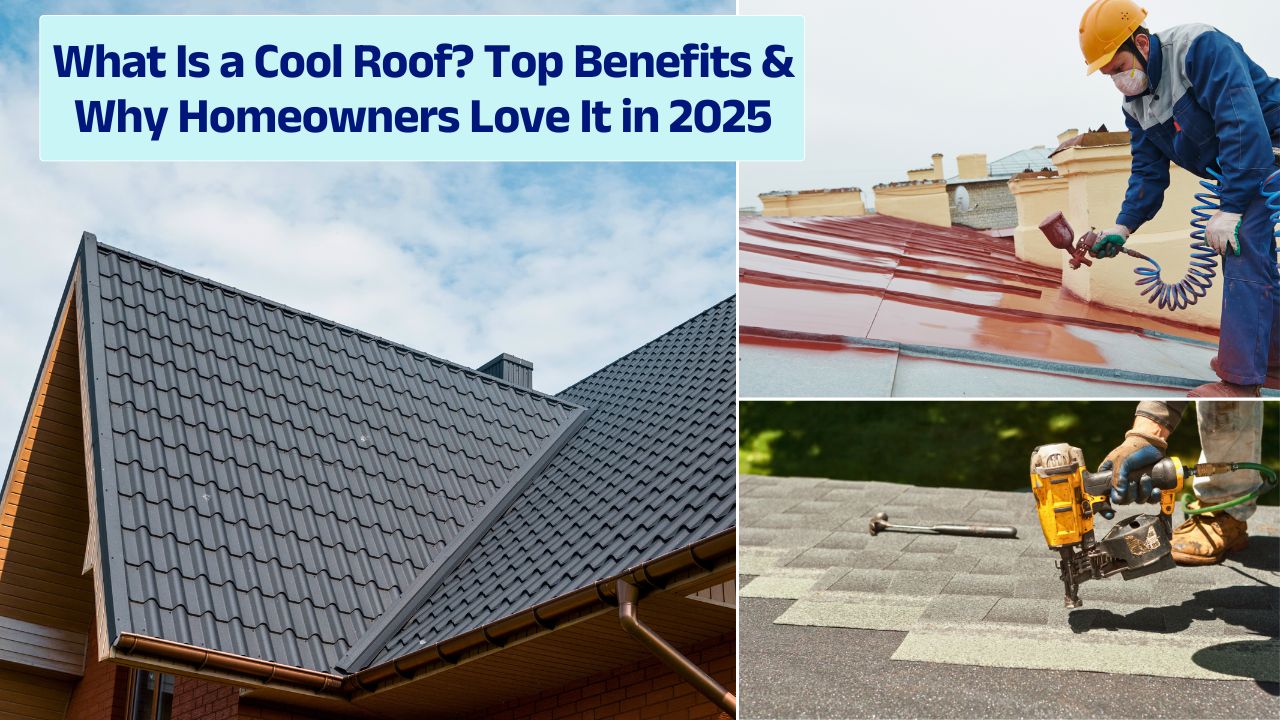
Liquid coatings that can be applied to existing roofs. These are among the most affordable solutions for homeowners who don’t want a full roof replacement.
Cool Asphalt Shingles
Available in lighter colors with reflective granules. Popular among residential properties because they combine the traditional look with modern performance.
Cool Metal Roofs
Metal roofs coated with reflective paint or finishes offer long-term durability and excellent heat reflection.
Tiles and Slate
Clay and concrete tiles can be manufactured with reflective coatings. They not only reduce heat absorption but also provide a traditional aesthetic.
Single-Ply Membranes
Common in commercial buildings, these membranes (such as TPO or PVC) are naturally reflective and energy efficient.
Also Read: 8 Different Types of Roofs Explained for Beginners – Pros, Cons & Best Options for Your Home!
Why Cool Roofs Are So Popular in 2025
Rising Energy Costs
With electricity prices increasing globally, homeowners are looking for practical ways to reduce long-term bills. Cool roofs are a proven solution.
Extreme Heat Events
Climate change has made summers hotter, with record-breaking heatwaves across North America, Europe, and Asia. Cool roofs are an immediate way for homeowners to adapt.
Green Building Standards
More building codes and certifications, such as LEED and ENERGY STAR, recognize cool roofing as a sustainability feature. Builders and homeowners aiming for eco-friendly recognition are adopting it widely .
Growing Awareness
Thanks to years of education from roofing professionals, government agencies, and trusted resources, more homeowners now understand the real value of cool roofing systems.
Cost of Installing a Cool Roof
The cost depends on material and project size. On average, homeowners can expect to pay:
- Cool asphalt shingles: $5–$8 per square foot
- Cool metal roofing: $8–$14 per square foot
- Reflective coatings: $1.50–$3 per square foot
While initial costs can be slightly higher than traditional roofing, the energy savings often offset the difference within a few years.
Maintenance Requirements
Cool roofs are generally low maintenance but require periodic cleaning. Dirt and debris reduce reflectivity, so annual inspections and washing are recommended. Some coatings may need reapplication every 10–15 years to maintain performance.
Is a Cool Roof Right for You?
Cool roofs are best suited for homes in hot and sunny climates, where air conditioning is a significant part of energy use. However, even in moderate regions, they provide comfort and energy benefits.
For homes in colder climates, cool roofs may slightly increase heating costs in winter. Still, modern insulation techniques often balance this out, making cool roofs an all-season option.
Also Read: Roofing Materials Guide 2025: Best Metal, Tile & Asphalt Options Compared
Final Thoughts
In 2025, cool roofs have moved beyond trend status they’ve become a smart, long-term investment for energy efficiency, comfort, and sustainability. Whether you’re building a new home or upgrading an older roof, considering a cool roof can help you save money, extend your roof’s life, and contribute to a greener planet.
FAQs
What is the main purpose of a cool roof?
The main purpose of a cool roof is to reflect sunlight and release absorbed heat, keeping the roof surface cooler. This helps lower indoor temperatures, reduce energy bills, and extend roof life.
How long does a cool roof last?
The lifespan of a cool roof depends on the material. Cool shingles typically last 20–25 years, while metal and tile cool roofs can last 40–50 years with proper maintenance.
Are cool roofs more expensive than regular roofs?
Yes, cool roofs may cost slightly more upfront due to special coatings or materials. However, the long-term savings on energy bills usually offset the higher installation cost.
Can I convert my existing roof into a cool roof?
In many cases, yes. Reflective coatings or membranes can be applied to existing roofs, making them cooler without full replacement. However, it depends on the condition of your roof.
Do cool roofs work in cold climates?
Cool roofs are most effective in hot and sunny areas. In colder regions, they may slightly increase heating costs in winter, but modern insulation usually balances this out.