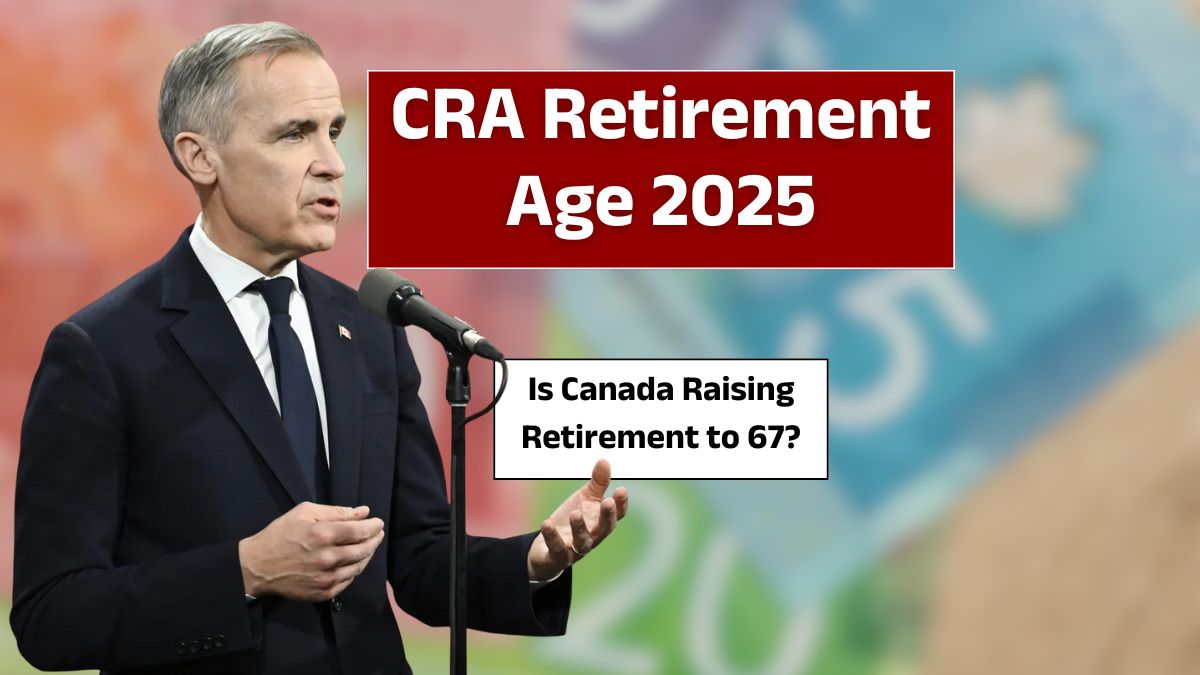
Retirement is one of the biggest milestones in a Canadian’s life, and the timing of it can shape how much you enjoy those golden years. But what if the age to retire changes? That’s exactly what’s being discussed in 2025. The CRA Retirement Age Increase 2025 has sparked serious talk across the country. So, are we saying goodbye to retirement at 65? Or is 67 the new standard?
Let’s break it down and see what’s actually happening, what’s speculation, and how it could affect your retirement planning.
Overview
Right now, Canadians are eligible for different retirement benefits at different ages. The Canada Pension Plan (CPP) can start as early as 60 with a reduced amount, or at 65 for the full payment. You can even delay it until 70 for a bigger monthly payout.
For Old Age Security (OAS) and the Guaranteed Income Supplement (GIS), you must be 65 or older. These are government-funded programs that support seniors who have low income or need extra help after they stop working.
But now, in 2025, experts are speculating that the Canadian Government might raise the retirement age—possibly to 67 years—as part of future reforms. This has caused confusion, especially for those nearing retirement.
Here’s a snapshot:
| Details | Information |
|---|---|
| Announcement | CRA Retirement Age Increase 2025 |
| Country | Canada |
| Year | 2025 |
| Current CPP Retirement Age | 60 (early), 65 (standard), 70 (delayed) |
| OAS/GIS Eligibility Age | 65 only |
| Expected New Age | 67 (not confirmed) |
| Affected Group | Future retirees |
| Official Confirmation | No (as of now) |
| Official Site | canada.ca |
Currentage
If you’re planning for retirement now, here’s where things currently stand:
- CPP (Canada Pension Plan): Standard age is 65, but you can start as early as 60 (with a penalty) or delay until 70 (with a bonus).
- OAS (Old Age Security): Starts at 65. No option to start early, but you can defer to 70 for a higher monthly amount.
- GIS (Guaranteed Income Supplement): Only available from age 65. No early or late options.
This gives Canadians flexibility to tailor their retirement age based on health, savings, and lifestyle goals.
Reason
So why would the government consider raising the retirement age?
Simple: people are living longer. That means more years drawing from government pension programs like CPP and OAS. At the same time, the working population is shrinking, putting strain on these systems.
Another reason is the financial sustainability of pension funds. If more people retire earlier and live longer, the government may need to collect more through taxes or raise the eligibility age to keep the system balanced.
It’s not just a Canadian issue—many countries, like the U.S., Germany, and France, have already raised or are planning to raise their retirement ages for similar reasons.
Impact
If Canada officially raises the retirement age, here’s what could happen:
- Current retirees: No impact. If you’re already receiving CPP or OAS, your payments won’t change.
- Nearing retirement: You might have to adjust your plans or work a bit longer to access full benefits.
- Young workers: You’ll likely need to contribute longer before becoming eligible for pension benefits.
Here’s a comparison table:
| Group | Impact If Age Increases to 67 |
|---|---|
| Current Retirees | No change |
| Near-Retirees (55–64) | May need to delay retirement |
| Young Workers (<55) | Will likely work longer and contribute more |
Status
As of now, the CRA and Services Canada have not officially confirmed any increase in the retirement age. Everything is still in the realm of speculation.
Yes, it’s being talked about by experts and analysts, and yes, it could make sense given the financial pressures. But until there’s an official policy change, the retirement age in Canada stays the same.
If and when any updates are made, they’ll be posted on the Service Canada website. If you’re planning your retirement soon, it’s a good idea to keep an eye on that portal.
Planning
What can you do in the meantime?
- Don’t panic—the rules haven’t changed yet.
- Plan for flexibility—save as if you’ll retire at 67, even if you plan to stop working earlier.
- Stay informed—watch for announcements from CRA or Services Canada.
- Talk to a financial advisor—especially if you’re within 5–10 years of retirement.
This way, you’ll be prepared whether the age changes or not.
Retirement planning is already stressful enough without rumors swirling around changes in age limits. While there’s no official word yet, talks of increasing Canada’s retirement age to 67 are definitely heating up. Whether or not the government moves ahead with it, it’s smart to start adjusting your financial strategy now—just in case.
If you’re nearing retirement, keep checking canada.ca for verified updates. And if you’re still years away, start planning as though 67 is your goal—you’ll thank yourself later.
FAQs
Is retirement age in Canada changing?
Not officially. Discussions are ongoing, but no change confirmed.
What is the current CPP retirement age?
You can start at 60 (reduced) or at 65 for full CPP.
When can I get OAS payments?
OAS starts at age 65. You can defer up to 70 for more.
Who will be affected if age increases?
Future retirees and younger workers, not current retirees.
Where to check retirement updates?
Visit the official Service Canada website at canada.ca.